From Hotelier to Domain QA: A New Career Path for Service Professionals
As kiosks take over parts of the front desk, frontline experience need not be a fading skill; it can become a skill that protects system quality
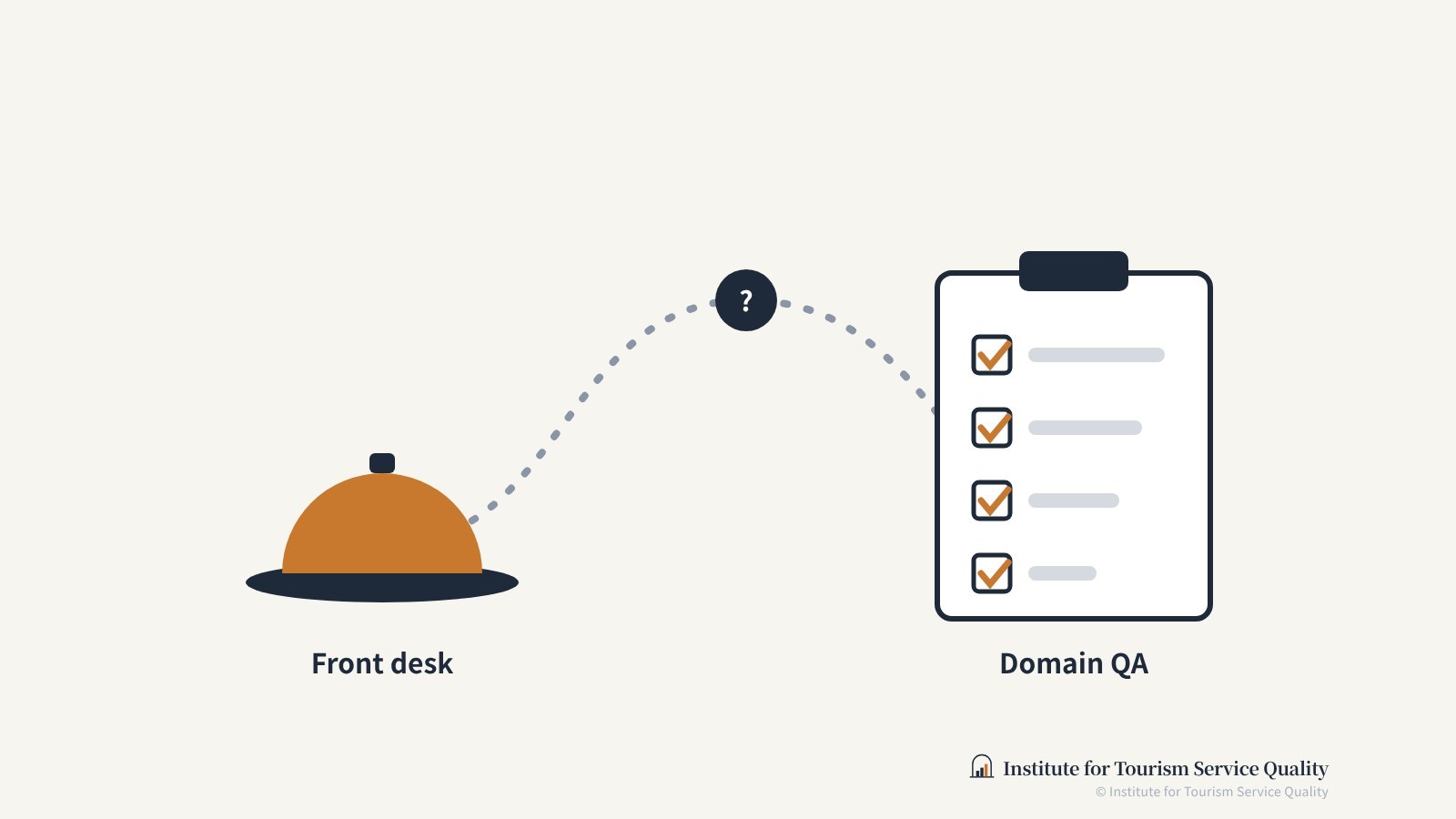
Self-service kiosks are appearing at hotel front desks, and check-in and room key issuance are moving to mobile apps. The digital transformation of tourism and hospitality changes the guest experience and, at the same time, raises questions about the careers of the service staff who have worked on the front line. Where can the experience they have built up be used from now on?
Director Winston Park's book Let's Do QA Together with AI Agents (in Korean) starts from this question. In the prologue, the author explains that he studied hotel management and, while working as a front office manager (FOM) at an international brand hotel, began to worry that front desk staff would one day be replaced by kiosks. He later moved to an IT company that provides hotel solutions, including kiosks, and became a quality assurance (QA) specialist on the strength of his hotel career.
The place of domain QA
Chapter 13 of the book explains that the jobs labelled "QA" on the job market are more varied than one might think. They include QA engineers who design and run tests, test automation engineers who develop automation scripts, specialists who check performance and security, and QA leads who manage test strategy and staff.
Among these, the role the book highlights for people with service backgrounds is domain QA: QA specialists who focus on systems for a particular business, such as finance, healthcare, hotels or games. Work experience in fields such as hotels, travel, hospitals, logistics and education is a major asset at companies that build systems for that work. Someone who knows how bookings are changed, how group check-ins are handled and what exceptions arise in settlement can test situations developers may not think of.
From service skills to quality assurance skills
ISTQB lists the skills of a good tester as testing knowledge, thoroughness and curiosity, communication and listening, analytical and critical thinking, technical knowledge, and knowledge of the business domain. The book argues that all of these except technical knowledge can be developed regardless of one's academic background, and that people with frontline experience are at an advantage in some of them.
- Business knowledge: Knowing front desk, reservations and settlement work lets you ask, "What happens if someone actually uses it this way?"
- Empathy for users: You know that a screen that seems obvious to developers can be difficult for first-time users.
- Communication: The ability to report a defect as information rather than blame is developed through dealing with guests on the front line.
- Curiosity: The question "Why does this behave like this?" is where finding defects begins.
Imagining the front line, and saying "That's not how it actually works at the front desk", is a role AI cannot easily take over.
Translating experience into the language of quality assurance
The hardest part of a career change is explaining past experience in the language of the new role. The book recommends putting three verbs into a CV when translating experience into the language of QA: what you checked, what you found, and to whom and how you reported it.
For example, "two years at a hotel front desk" can be rewritten as experience of handling daily reservation and check-in work, identifying recurring error patterns in the reservation system and passing improvement requests to the IT team. Experience in a customer service centre becomes experience of classifying customer inquiries by type and reporting the most frequent recurring issues to the team. Elements of quality assurance are already part of everyday work on the service front line.
As a way to acquire a shared vocabulary, the book introduces the ISTQB Certified Tester Foundation Level (CTFL). A certificate does not guarantee practical ability, but it shows that you have learned testing terms and concepts systematically and lets you talk to development teams in the same language. Chapters 1 to 7 of the book follow the structure of the CTFL syllabus.
Implications for tourism workforce policy
Discussions of the tourism and hospitality workforce have so far focused on securing and training frontline service staff. Now that guest touchpoints are moving into systems, however, there is new demand for people who combine service experience with skills in system quality assurance. Companies that build hotel solutions need people who understand the front line, and hotels need people who can judge the quality of the systems they adopt.
This trend sets several tasks for tourism education and workforce policy: including the basics of software quality and data use in hotel management curricula, creating training pathways for current service staff to move into digital roles, and building a culture that recognises moves between hotels and IT companies as an expansion of a career rather than a break in it. Even if kiosks take over part of the front desk, judging whether those kiosks work correctly for guests still requires people who know the front line.
References
Most sources are in Korean.
- 박건희 (2026). 이제 QA, AI Agent랑 같이 합시다. 부크크. 프롤로그, 1장, 13장.
- ISTQB. Certified Tester Foundation Level (CTFL) Syllabus, v4.0.1.
Was this article helpful?
This is an English version of the original Korean article. If the two differ, the Korean original prevails.
© Institute for Tourism Service Quality. All rights reserved.