How a Front Office Manager Who Feared Kiosks Came to Ask About Quality
The worry of being replaced became the starting point for new work
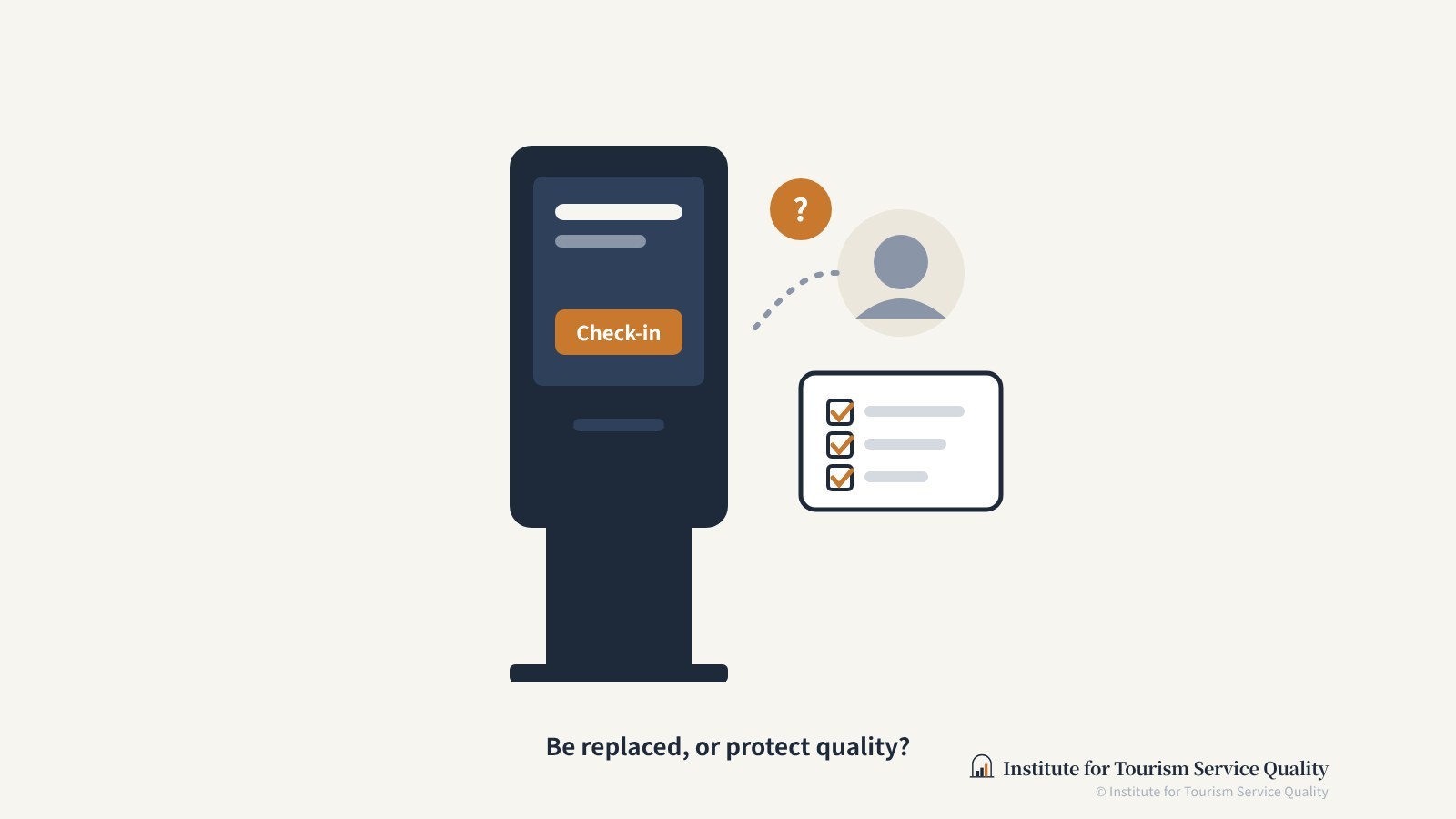
"Most hotel front desk staff will one day be replaced by self-service kiosks."
One day, while I was working as a front office manager at an international brand hotel, this sentence suddenly came to mind. It was different from ordinary job insecurity at the company I worked for. It was the fear that my entire career and experience, built on a degree in hotel management and years on the front line, was under threat. If checking guests in, assigning rooms and listening to complaints could be replaced by a single machine, where would my expertise remain?
Looking back, that fear became the starting point for moving into a new field. To turn the crisis into an opportunity, I knocked on the door of an IT company that makes hotel solutions, including the very kiosks that threatened me. My hotel career was recognised and I started new work, and today I am a QA specialist managing the quality of systems used in many hotels. I left hotels, but I am still working for them.
"Just check the CRUD"
The new job was not easy. Not long after I started in QA, a developer colleague asked me, "Could you just check the CRUD?" That CRUD stands for the four basic operations on data, create, read, update and delete, is very basic knowledge to me now. At the time, though, I did not know what it meant and was flustered. I was quite embarrassed that I had not properly understood a colleague's request because I did not know one term.
From that day on, I decided to study testing properly from the beginning. That is how I came across ISTQB, the international certification scheme for software testing.
What I had done by instinct had names
As I studied, I discovered something surprising: everything I had been doing by instinct had a name.
My habit of always trying 14 and 15 nights when a rule allowed bookings of up to 14 nights was "boundary value analysis". My habit of looking closely again at screens that had caused problems before was the principle of "defect clustering". The habit of asking "What about this case?" at the front desk was, in the language of software testing, a set of systematic techniques.
Once I knew the names, I could explain them to colleagues. Once I could explain them, I could change the way we worked. My frontline experience had not disappeared; it had simply gained a new language.
The way I work changed again
Recently, the way I work changed once more: I started working with AI agents. The time spent extracting test conditions from specifications, turning notes into defect reports and classifying accumulated customer inquiries has dropped sharply.
At the same time, I realised something. To judge whether an AI agent's output is right, you still need to know the basics of testing. AI does not know the maximum occupancy of a deluxe room or what our hotel's cancellation penalty rules are. We still need people who know these things and who can look at the results and say, "This is wrong."
Rethinking the kiosk
My original fear of kiosks was only half right. Some front desk tasks really are moving to machines. But judging whether those machines work correctly for guests, whether they calculate a two-night guest's last night properly and whether they charge cancellation penalties accurately, still requires people who know the front line.
I do not think the digital transformation of the hotel industry needs to be seen only as the disappearance of jobs. The instincts built on the service front line can carry over into the ability to protect system quality. To do that, however, we need to learn a language that can explain those instincts. I want to tell colleagues on the front line who share the same worries that learning that language is not as hard as it seems, and that there are things people without a technical background can actually do better.
References
Most sources are in Korean.
- 박건희 (2026). 이제 QA, AI Agent랑 같이 합시다. 부크크. 프롤로그.
Was this article helpful?
Trained in hotel management, he worked as a front office manager at an international brand hotel and earned a Ph.D. in Tourism from Kyonggi University. He now leads service planning, customer feedback (VOC) analysis and quality assurance at a hotel IT solutions company.
This is an English version of the original Korean article. If the two differ, the Korean original prevails.
© Institute for Tourism Service Quality. All rights reserved.